Writer Reflection
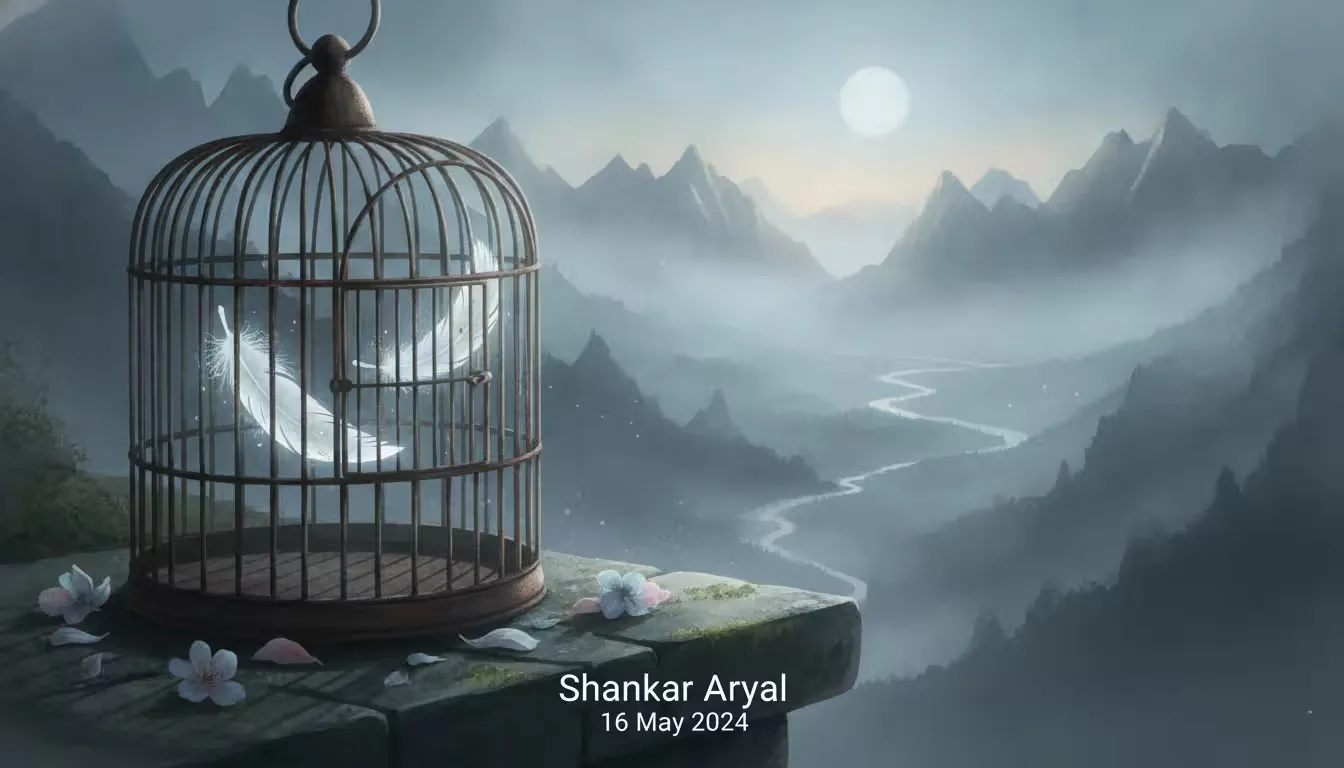
"Pakhetako Pinjada" is more than a poem of lost love; it is a quiet meditation on love, sacrifice, time, mortality, and the emotional burdens carried within the human heart. Through the recurring image of a butterfly, the poem symbolizes beauty, freedom, innocence, and fragile emotions, while its death represents broken dreams, unspoken feelings, and possibilities that vanished before they could become reality.
The natural elements that appear throughout the poem—dawn, the Himalayas, the Bagmati River, flowers, moonlight, and Annapurna—are not merely scenic descriptions but reflections of the speaker's inner world. While nature remains beautiful and eternal, the poet's heart is filled with emptiness, solitude, and silent grief. This contrast between external beauty and internal sorrow gives the poem its emotional depth.
At its core, the poem explores a form of love that survives through distance rather than possession. The desire to keep someone far away despite loving them deeply reveals that sacrifice can sometimes become the purest expression of affection. Instead of seeking answers, the poem invites readers to reflect on the idea that some relationships continue to exist only as memories, yet remain alive within the soul long after they have ended.
Ultimately, "Pakhetako Pinjada" reminds us that not every love story is meant to be fulfilled; some are destined to become silent companions that shape our lives through remembrance rather than presence.
Poem Description
"Pakhetako Pinjada" is a symbolic poem centered on love, sacrifice, loneliness, and existential sorrow. It portrays the emotional struggle of loving someone deeply while believing that keeping them at a distance is the only possible choice.
The image of a dead butterfly resting upon a flower serves as the poem's central metaphor, representing fragile beauty, fleeting life, unfulfilled dreams, and love that could never reach its destination. Through vivid natural imagery such as the Himalayas, Bagmati River, moonlight, flowers, and Annapurna, the poem blends Nepal's landscape with the poet's inner emotional journey.
Rather than telling a straightforward love story, the poem explores the psychological and philosophical conflict between desire and restraint. It suggests that true love is not always measured by union or possession; sometimes it reveals itself most deeply through acceptance, distance, and silent sacrifice.
With its layered symbolism and melancholic atmosphere, "Pakhetako Pinjada" becomes not only a poem about personal loss but also a reflection on the impermanence of life, memory, and human emotions.
Writer Introduction
Shankar Aryal does not consider himself a professional poet or literary writer. Instead, he occasionally uses poetry as a medium to express his thoughts, emotions, and reflections on life. His writing often explores themes such as love, death, memory, loneliness, time, and existential struggle, relying heavily on symbolism and metaphor rather than direct narration.
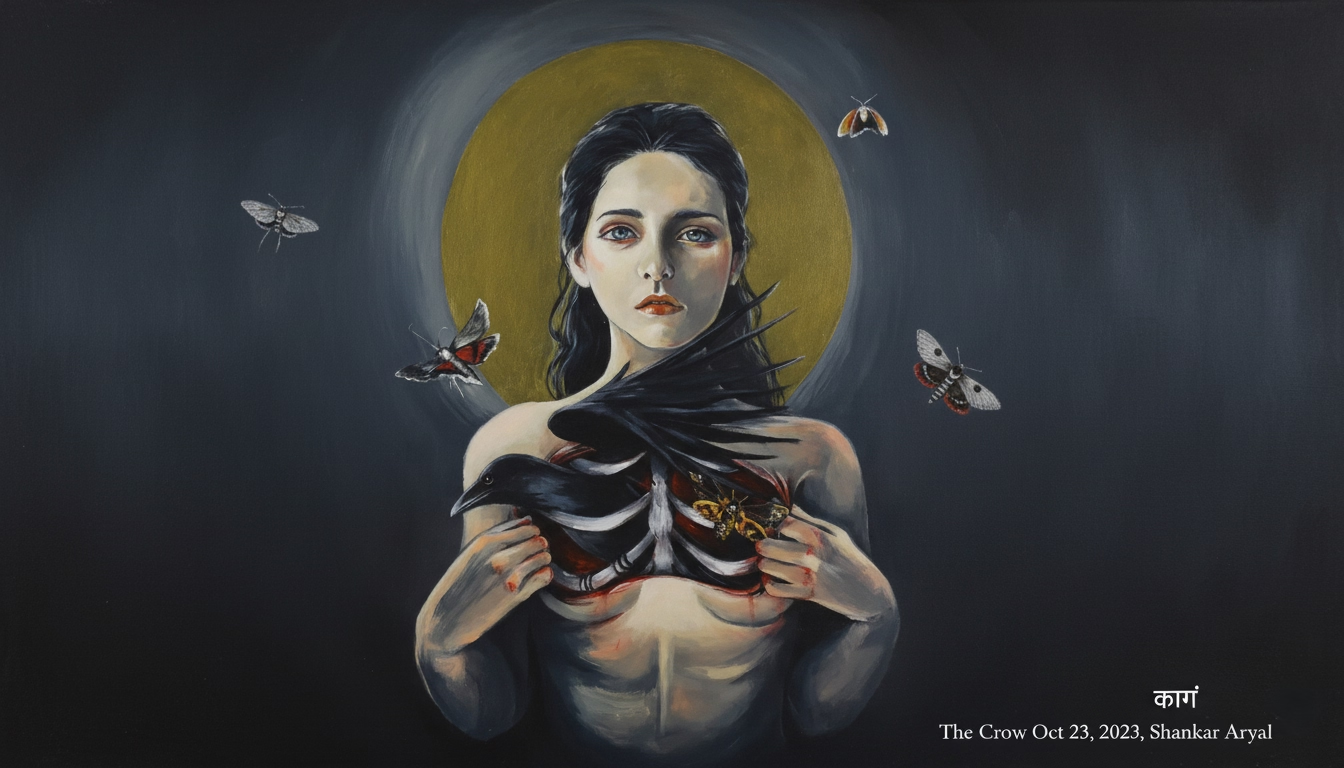
His works—including "Andhakarko Yatri," "Sapanako Canvas," "Kaag," "Chihanle Pukar Cha?", and "Pakhetako Pinjada"—reflect a deep interest in human emotions, impermanence, and philosophical contemplation. For him, poetry is less a literary pursuit and more a personal dialogue with the inner self, preserving emotions that ordinary language often fails to express.
Beyond literature, Shankar Aryal is an Electrical Engineering student, a full-stack developer, and a technology enthusiast. He believes that engineering and poetry share a common purpose: both seek to understand complexity—one through logic and innovation, the other through imagination and emotion. By balancing technical knowledge with creative expression, he continues to explore both the scientific and artistic dimensions of human experience.
लेखकको प्रतिबिम्ब
"पखेटाको पिंजडा" केवल प्रेम-वियोगको कविता होइन; यो प्रेम, त्याग, समय, मृत्यु र आत्मसंघर्षबीचको मौन संवाद हो। कविताभरि प्रयोग गरिएको पुतलीको बिम्बले क्षणभंगुर सौन्दर्य, स्वतन्त्रता र कोमल भावनाको प्रतिनिधित्व गर्छ, जबकि त्यसको मृत्युले अधुरा सपना, अव्यक्त प्रेम र समयले खोसेका सम्भावनाहरूलाई संकेत गर्छ।
कवितामा प्रकृतिका दृश्यहरू—उषा, हिमाल, बागमती, फूल, चन्द्रमा र अन्नपूर्णा—सिर्फ सजावटका लागि होइनन्; तिनीहरू कविको भित्री भावनाका प्रतिबिम्ब हुन्। बाहिरी संसार सुन्दर र उज्यालो देखिए पनि कविको अन्तरमन शून्यता, पीडा र एक्लोपनले भरिएको छ। यही विरोधाभासले कवितालाई अझ गहिरो बनाउँछ।
यस कविताले एउटा यस्तो अवस्थाको चित्रण गर्छ जहाँ प्रेम प्राप्त गर्नुभन्दा त्यसलाई मौन रूपमा त्याग्नु ठूलो निर्णय बन्छ। "तिमीलाई चाहन्छु, तर टाढा राख्नुपर्छ" भन्ने भावले प्रेमको अर्को रूप देखाउँछ—जहाँ स्वामित्वभन्दा संरक्षण ठूलो हुन्छ, र भेटभन्दा सम्झना दीर्घकालीन बन्छ।
अन्ततः "पखेटाको पिंजडा" ले पाठकलाई यो सोच्न बाध्य बनाउँछ कि जीवनका सबैभन्दा गहिरा सम्बन्धहरू सधैं सँगै भएर होइन, कहिलेकाहीँ टाढा बसेर पनि बाँचिरहन्छन्। केही प्रेमहरू कहिल्यै हराउँदैनन्; तिनीहरू केवल स्मृतिमा रूपान्तरण हुन्छन्।
कविताको विवरण
"पखेटाको पिंजडा" प्रेम, त्याग, एक्लोपन र अस्तित्वगत पीडालाई केन्द्रमा राखेर लेखिएको एक प्रतीकात्मक कविता हो। यसले गहिरो रूपमा चाहेको व्यक्तिलाई परिस्थितिवश वा आफ्नै निर्णयले टाढा राख्नुपर्दाको मौन वेदनालाई चित्रण गर्छ।
कवितामा देखिएको मरेको पुतली सम्पूर्ण रचनाको मूल प्रतीक हो। यसले क्षणभंगुर जीवन, अधुरा सपना, असम्भव प्रेम र समयसँगै हराउँदै जाने आशालाई प्रतिनिधित्व गर्छ। फूलहरूको बगैँचा, हिमाल, बागमती, चन्द्रमा र अन्नपूर्णाजस्ता प्राकृतिक बिम्बहरूले कवितालाई नेपाली परिवेशसँग जोड्दै भावनात्मक गहिराइ थपेका छन्।
यो कविता कुनै एक व्यक्तिको प्रेमकथा मात्र होइन; यो आफूभित्रका इच्छाहरूलाई दबाएर बाँच्नुपर्ने मानिसको मनोवैज्ञानिक र दार्शनिक संघर्षको अभिव्यक्ति पनि हो। प्रेमलाई प्राप्त गर्नु नै यसको अन्तिम उद्देश्य होइन, बरु त्यसलाई सम्मान गर्दै त्याग गर्न सक्नु पनि प्रेमकै एउटा गहिरो स्वरूप हुन सक्छ भन्ने भाव कविताले प्रस्तुत गर्छ।
लेखकको परिचय
शंकर अर्याल आफूलाई औपचारिक रूपमा कवि वा साहित्यकार मान्दैनन्। तर कहिलेकाहीँ उनी आफ्ना अनुभूति, विचार र जीवनप्रतिको दृष्टिकोणलाई कवितामार्फत अभिव्यक्त गर्ने गर्छन्। उनका लेखनमा प्रेम, मृत्यु, समय, स्मृति, एक्लोपन, अस्तित्वगत प्रश्न र आत्मसंघर्षजस्ता विषयहरू बारम्बार देखिन्छन्। प्रत्यक्ष वर्णनभन्दा प्रतीकात्मक बिम्ब र रूपकमार्फत भावना व्यक्त गर्ने शैली उनको विशेषता हो।
उनका सिर्जनाहरू—"अन्धकारको यात्री", "सपनाको क्यानभास", "काग", "चिहानले पुकार छ?", र "पखेटाको पिंजडा"—मानवीय संवेदना, क्षणभंगुरता र मौन पीडालाई गहिरो रूपमा प्रस्तुत गर्ने प्रयासका रूपमा लिन सकिन्छ। उनका लागि कविता साहित्यिक प्रदर्शनभन्दा बढी आत्मसंवाद र भावनात्मक अभिलेख हो।
साहित्यबाहेक शंकर अर्याल इलेक्ट्रिकल इन्जिनियरिङका विद्यार्थी, फुल-स्ट्याक डेभलपर, तथा प्रविधिप्रेमी सर्जक हुन्। विज्ञान र प्रविधिको तार्किक संसारसँगै सिर्जनात्मक अभिव्यक्तिको भावनात्मक संसारलाई समान रूपमा आत्मसात् गर्दै उनी आफ्नो यात्रा अघि बढाइरहेका छन्। उनका लागि इन्जिनियरिङले समस्याको समाधान खोज्छ भने कविताले मनभित्रका अनुत्तरित प्रश्नहरूलाई आवाज दिन्छ।