Writer Reflection
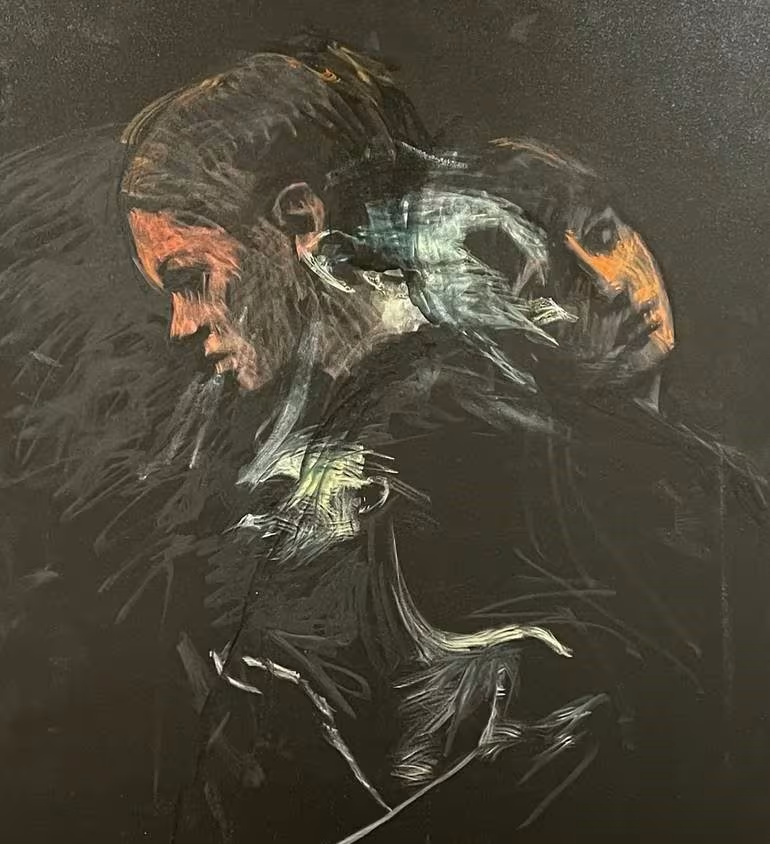
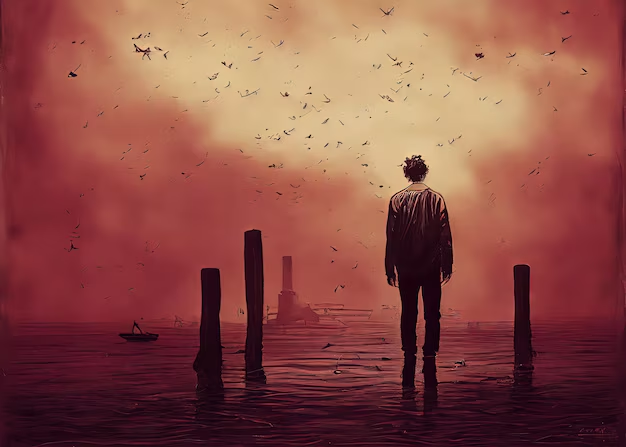
I wrote this poem in a moment of profound introspection, drawing from the raw experience of witnessing love transcend the boundary between life and death. The narrative I wanted to capture was specific and intimate: a lover sitting alone in a room that has become a grave, positioned between the body of his beloved and her lingering spirit. In the silence of midnight, he drinks to numb the ache, cries at the window, and searches the moonlit sky for her face. She is everywhere and nowhere—adorned by moonlight yet distant as stars, present in his heart yet impossibly far away.
I wanted to explore what happens in that threshold space—between physical death and spiritual presence, between memory and reality, between the corporeal and the eternal. It is here, in this impossible liminal space, that the grave itself seems to call, to question, to demand something that cannot be answered. This poem is my attempt to give voice to that calling. When I sat down to write on January 1, 2024, I was not trying to create something conventionally beautiful or comforting. Instead, I wanted to capture the raw, unresolved nature of grief—the way it persists, the way it refuses closure, and the way it transforms everything it touches. Every image in this poem emerged from the desire to express what cannot be easily expressed: the presence of the absent, the silence that speaks, the calling that comes from beyond the grave.
Poem Description
The central theme of this poem is the intersection of mortality and memory—how we confront death through the act of remembrance. The title itself, "चिहानले पुकार छ?" (Does the Grave Call?), frames death not as silent finality but as an active, insistent presence that demands our attention and our response. The grave does not simply exist as a passive symbol of ending; it calls. It questions. It refuses to be forgotten or ignored. The repeated refrain that echoes throughout the poem—"मध्यरातमा, छुटेको छ सबै" (In midnight, everything is lost)—captures how grief returns cyclically, not as a single moment of loss but as waves that crash repeatedly against the heart. Midnight becomes the hour of maximum darkness, the symbolic moment when mortality feels most present, most real, most inescapable. Death is not something distant or abstract in this poem. It is intimate. It calls to us through the loss of those we love. It transforms the spaces we inhabit—even a room becomes a graveyard. It reshapes our understanding of time itself, so that midnight is no longer just a clock reading but a psychological and spiritual state where we must face what cannot be changed.
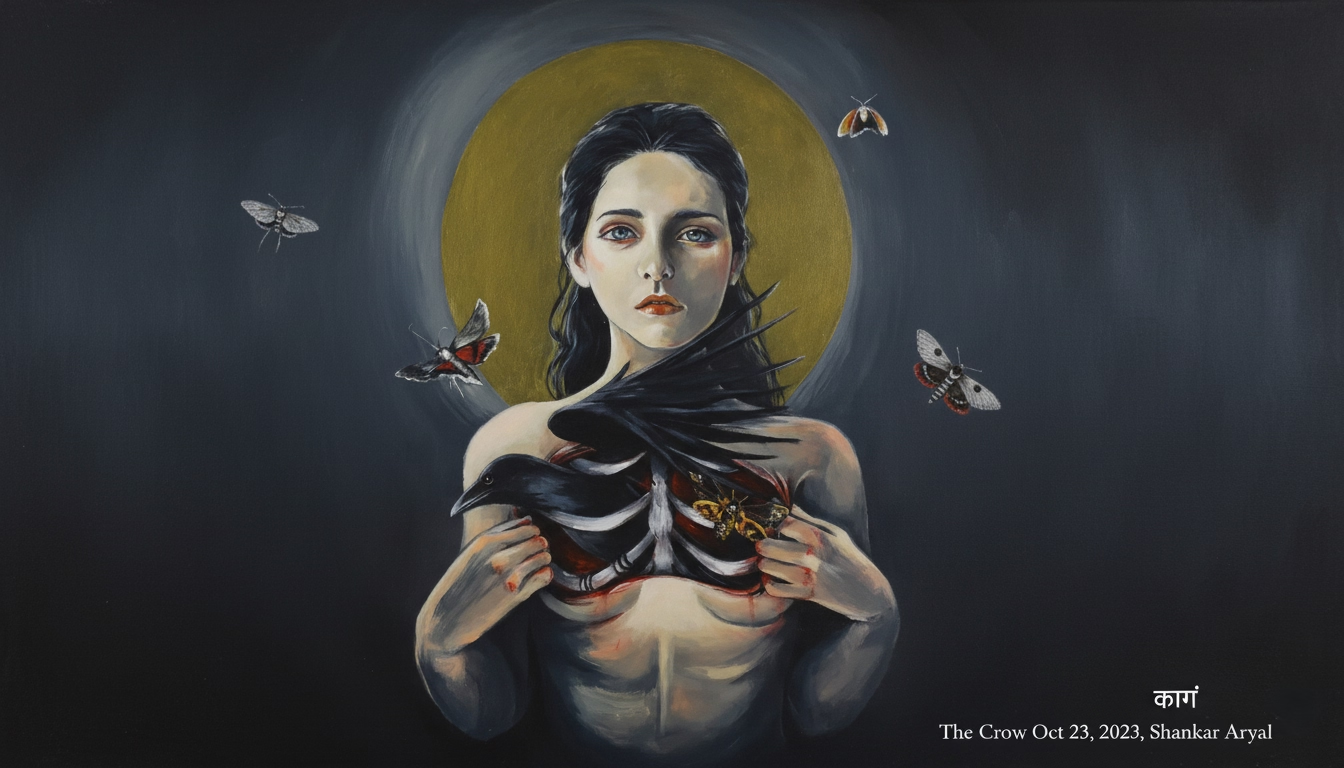
Memory functions as the counterforce to this relentless mortality. I wanted to explore how memory operates paradoxically in the experience of grief—it is simultaneously what keeps us connected to the lost beloved and what perpetuates our pain. In the lines where I wrote, "सपना छुटे पनि सम्झनाले बाँधिरहेछ" (Though dreams are lost, memory continues to bind us), I was attempting to capture something essential: memory does not heal loss, but it does preserve it. It refuses to let the beloved fade completely into nothing. The "सम्झनाका धागाहरू" (threads of remembrance) hold together the fragmented life left behind after loss. These threads are both salvation and suffering. Memory keeps the beloved alive in the heart even as the body lies dead. But this living presence is also a kind of torture, because the beloved remains irretrievably absent. The beloved exists in memory alone—perfect, unchanging, unreachable.
The profound paradox at the heart of this poem's theme is this: we desperately want to remember because forgetting feels like a second death, yet remembering perpetuates the pain of loss. Memory is the price we pay for having loved deeply. The beloved appears in the night sky "declared by moonlight"—visible, radiant, beautiful—yet infinitely distant. This is what memory offers: presence without substance, vision without touch, connection without resolution. When I ask in the poem whether the stars can see me again, I am asking whether the beloved can return, yet I know the answer lies in the eternal silence that follows. The beloved is obscured by "the veil of separation," just as all we have lost is obscured by the finality of death.
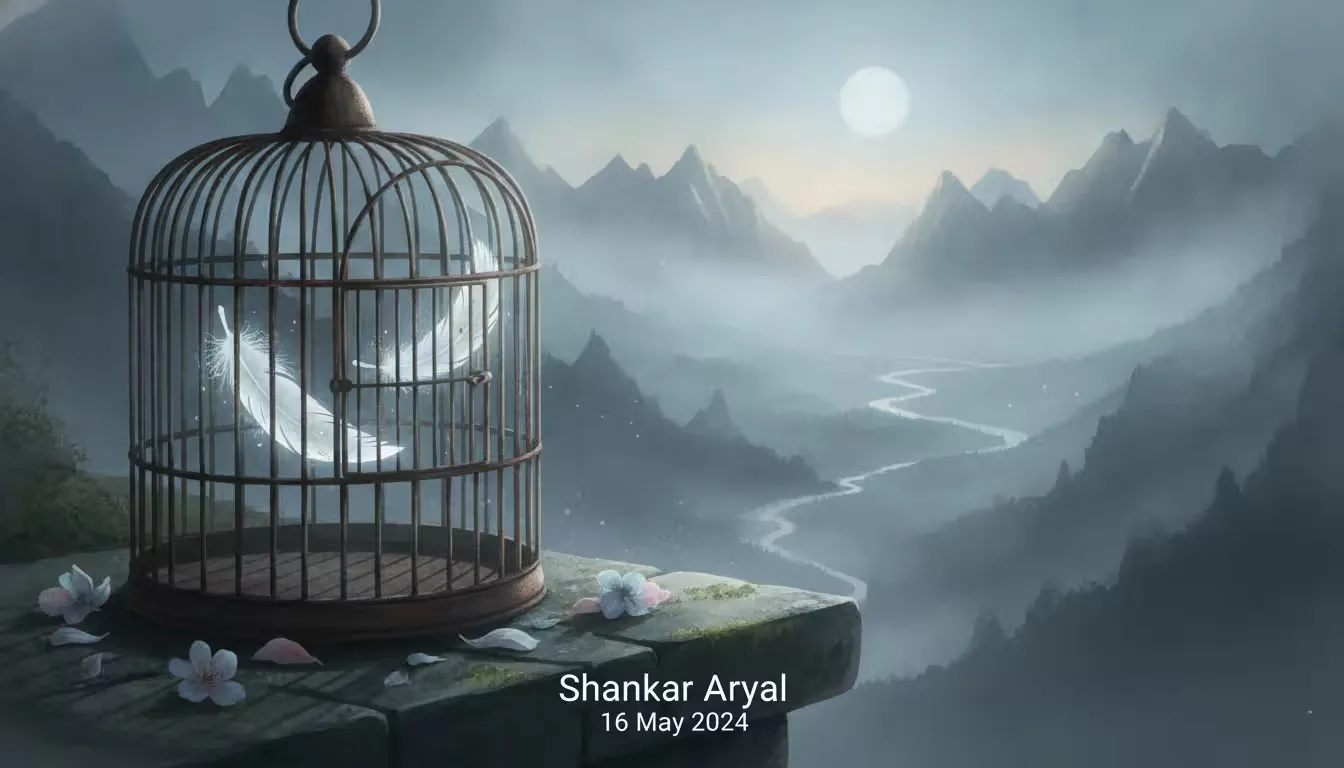
Both mortality and memory work together to create the emotional and spiritual landscape of this poem. Mortality introduces loss; memory refuses to accept it fully. Mortality silences the beloved; memory keeps her calling back to the lover's heart. The grave may be silent, yet the calling continues—because memory will not let it stop. It is this tension, this unresolved dialogue between death and remembrance, that gives the poem its haunting power and its painful truthfulness. When I wrote the final lines—"चिहान मौन छ, तर पुकार कहिल्यै थाम्दैन" (The grave is silent, but the calling never ceases)—I was attempting to express the essential truth I discovered through writing this poem: that loss becomes a permanent companion, not something that ever fully resolves. The beloved is gone, but the love—and therefore the ache—persists. The calling is the evidence that something sacred was shared, something real was loved, something beautiful was lost.
Writer Introduction
Shankar Aryal is a writer who explores themes of life, emotions, and human experiences through poetry and literature.
लेखकको प्रतिबिम्ब
मैले यो कविता गहिरो आत्मचिन्तनको क्षणमा लेखें, जसमा प्रेम र मृत्युको सीमा पार गर्ने अनुभवबाट प्रेरणा लিएँ। मैले क्याप्चर गर्न चाहेको कथा विशेष र अन्तरंग थियो: एक प्रेमी एकलो बस्ने कोठामा बसेको छ जो चिहानमा परिणत भएको छ, आफ्नो मृत प्रियजनको शरीर र उसको स्थायी आत्माको बीचमा। मध्यरातको मौनमा, उसले दुःखलाई सुस्त पार्न पिउँछ, खिडकीमा रोएँ, र चाँदनी आकाशमा उसको अनुहार खोज्छ। वह सर्वत्र र कतै पनि छैन—चाँदनीले सजिएको तर तारा जस्तै टाढा, उसको मनमा उपस्थित तर असम्भवै दूर।
मैले त्यो थ्रेसहोल्ड स्पेस अन्वेषण गर्न चाहें—शारीरिक मृत्यु र आध्यात्मिक उपस्थिति बीच, स्मृति र वास्तविकता बीच, भौतिक र अनन्त बीच। यह असम्भव लिमिनल स्पेसमा छ कि चिहान आफै कल गर्न, प्रश्न गर्न, ऐसो कुरा माग्न लाग्छ जसको जवाफ हुन सक्दैन। यो कविता त्यो कलको आवाज दिने मेरो प्रयास हो। जनवरी १, २०२४ मा मैले बस्न बसें, मैले कन्वेनशनली सुन्दर वा सान्त्वनादायक कुरा बनाउन कोशिश गरिरहें नथें। यसको सट्टामा, मैले दुःखको कच्चो, अनसमाधान गरिएको प्रकृति क्याप्चर गर्न चाहें—जसरी यो दृढ रहन्छ, जसरी यो अन्त्य अस्वीकार गर्छ, र यसले सबै कुरालाई कसरी रूपान्तरित गर्छ। यस कवितामा प्रत्येक चित्र त्यो अभिव्यक्त गर्ने इच्छाबाट उदभूत भयो जो सजिलै अभिव्यक्त हुन सक्दैन: अनुपस्थित को उपस्थिति, मौनता जो बोल्छ, कबरबाट आउने कल।
कविताको विवरण
यस कवितको केन्द्रीय विषय मृत्यु र स्मृतिको प्रतिच्छेदन हो—कसरी हामी स्मरणको कार्यमा मृत्युको सामना गर्छौं। शीर्षक आफै, "चिहानले पुकार छ?" (के चिहान कल गर्छ?), मृत्युलाई निःशब्द अन्त्य नभएर सक्रिय, आग्रहपूर्ण उपस्थितिको रूपमा फ्रेम गर्छ जो हाम्रो ध्यान र प्रतिक्रिया माग्छ। चिहान केवल अन्त्यको निष्क्रिय प्रतीकको रूपमा अवस्थित छैन; यो कल गर्छ। यो प्रश्न गर्छ। यो भुल्न वा बेवास्ता गर्नको लागि अस्वीकार गर्छ। कवितामा गुञ्जिरहेको दोहोरिएको रिफ्रेन—"मध्यरातमा, छुटेको छ सबै" (मध्यरातमा, सबै खोइयो)—कसरी दुःख चक्रीय रूपमा फर्किन्छ भनेर पकडिन्छ, हारिएको एकल क्षण नभएर हृदयमा बारबार क्र्यास गर्ने तरङ्गहरू। मध्यरात अधिकतम अन्धकारको घण्टा बन्छ, प्रतीकात्मक क्षण जब मृत्यु सबैभन्दा उपस्थित, सबैभन्दा वास्तविक, सबैभन्दा अपरिहार्य महसुस हुन्छ। यस कवितामा मृत्यु कुनै दूरवर्ती वा अमूर्त कुरा छैन। यो अन्तरंग छ। यो हाम्रालाई हामीले प्रेम गरेकाको हानिको माध्यमबाट बोल्छ। यसले हामीले बसेको स्थान रूपान्तरित गर्छ—एक कोठा पनि कबरस्तान बन्न सक्छ। यसले समयको हाम्रो बोध पुनर्नवीकरण गर्छ, ताकि मध्यरात सँधै घड़ी पढिको सट्टा एक मनोवैज्ञानिक र आध्यात्मिक अवस्था बन्छ जहाँ हामीले जो परिवर्तन हुन सक्दैन सोसोबै सामना गर्नुपर्छ।
स्मृति यस अवरोधक शक्तिको रूपमा कार्य गर्छ। मैले अन्वेषण गर्न चाहें कसरी स्मृति दुःखको अनुभवमा विरोधाभासी रूपमा कार्य गर्छ—यो एकै साथ जो हामीलाई हारिएको प्रियजनसँग जोडिएको राख्छ र हाम्रो पीडा दोहोरिन्छ। मैले लेखें जहाँ, "सपना छुटे पनि सम्झनाले बाँधिरहेछ" (सपनाहरू खोएपनि स्मृति हामीलाई बाँध्न जारी राख्छ), मैले कुरा अनिवार्य क्याप्चर गर्न कोशिश गरिरहें: स्मृति हारिएकोलाई निको गर्दैन, तर यो यसलाई सुरक्षित राख्छ। यो प्रियजन पूर्ण रूपमा कुनै मा लोप हुन अस्वीकार गर्छ। "सम्झनाका धागाहरू" (स्मृतिको धागाहरू) जो हारिएको पश्चात् छोडिएको खण्डित जीवनलाई एकै गर्छ। यी धागाहरू मुक्ति र पीडा दुवै हन्। स्मृति प्रियजनलाई हृदयमा जीवित राख्छ जबकि शरीर मरेको छ। तर यो जीवन्त उपस्थिति पनि एक प्रकारको यातना हो, किनकि प्रियजन अपरिवर्तनीय रूपमा अनुपस्थित रहन्छ। प्रियजन एकमात्र स्मृतिमा अवस्थित छ—सिद्ध, अपरिवर्तनीय, अप्राप्य।
यस कवितामा आकार दिने विषयको केन्द्रमा गहिरो विरोधाभास यह छ: हामी अत्यन्त स्मरण गर्न चाहन्छौं किनभने बिर्सनु दोस्रो मृत्यु जस्तो लाग्छ, तर स्मरण गर्न दुःखको पीडा दोहोरिन्छ। स्मृति गहिरो प्रेम गरेकोको लागि हाम्रो भुक्तानी हो। प्रियजन रातको आकाशमा उपस्थित हुन्छ "चाँदनीले घोषणा गरिएको"—दृश्यमान, दीप्तिमान्, सुन्दर—तर अनन्ततः दूरको। यो स्मृति प्रदान गर्छ: पदार्थ बिना उपस्थिति, स्पर्श बिना दृष्टि, समाधान बिना जोडिएकोता। जब मैले कवितामा सोध्छु कि तारा फेरि मलाई देख्न सक्छन्, मैले सोध्छु कि प्रियजन फर्किन सक्छ, तर मैले जवाफ जान्छु जो अनुसरण गर्छ अन्तिम मौनमा निहित छ। प्रियजन "वियोगको पर्दा" द्वारा अस्पष्ट छ, जसरी सबै हामीले खोएकोलाई मृत्यु को अन्त्यबाट अस्पष्ट गरिन्छ।
मृत्यु र स्मृति दुवै यस कवितको भावनात्मक र आध्यात्मिक परिदृश्य सिर्जना गर्नको लागि एकै साथ कार्य गर्छन्। मृत्यु हार परिचय गर्छ; स्मृति पूर्ण रूपमा स्वीकार गर्न अस्वीकार गर्छ। मृत्यु प्रियजनलाई निःशब्द गर्छ; स्मृति उसलाई प्रेमीको हृदयमा पुनः कल गर्न राख्छ। चिहान चुप हुन सक्छ, तर कल जारी रहन्छ—किनभने स्मृति यसलाई रोक दिन अनुमति दिदैन। यह तनाव, मृत्यु र स्मृति बीचको यह अनसमाधान संवाद, कवितालाई यसको विचित्र शक्ति र पीडादायक सत्यता दिन्छ। जब मैले अन्तिम पंक्तिहरू लेखें—"चिहान मौन छ, तर पुकार कहिल्यै थाम्दैन" (चिहान मौन छ, तर कल कहिल्यै बन्द हुन्न)—मैले यो अनिवार्य सत्य अभिव्यक्त गर्न कोशिश गरिरहें जो मैले यो कविता लेखेर पत्ता लगायें: कि हार एक स्थायी साथी बन्छ, कुनै कुरा जो कहिल्यै पूर्ण रूपमा समाधान हुन्न। प्रियजन जान गएको छ, तर प्रेम—र यसकारण पीडा—रहन्छ। कल साक्ष्य हो कि केही पवित्र साझा गरिएको थियो, केही वास्तविक प्रेम गरिएको थियो, केही सुन्दर खोएको थियो।
लेखकको परिचय
शंकर अर्याल कविता र साहित्यको माध्यमबाट जीवन, भावना र मानव अनुभवका विषयवस्तुहरू अन्वेषण गर्ने लेखक हुन्।